Categories
Infomations

How to choose a crate for your Shiba Inu /Challenge crate training!

Do Shiba Inu use crates? I use the crate when I want to rest, when I want to be left alone, or when I feel like relaxing in a dark place.

A crate can be useful in many ways, so here we will talk about how to choose a crate for your Shiba Inu, and about crate training so that your dog can use the crate properly.

By “crate” I mean a case for animals such as dogs like me. It is sometimes called a “carry” “cage” or “circle”, but here we call it a “crate”.

Why we decide to buy a crate?

First, let me explain why my master decided to buy a crate.

In my case, these are the three main reasons.

  • To keep it in while moving
  • For use at your accommodation
  • To evacuate in case of emergency

Some people may also use it as a place to relax or as a dog kennel.

It’s my castle now.

To keep it in while moving

My master thought about a lot of things before I started driving a car. In the end, he settled on putting a seat cover over the back seat of the car, but before that, he thought about putting me in a dog crate for transportation.

I can’t say whether a seat cover or a crate is the correct answer, but some dogs seem to feel more at ease and don’t get car sick if they put them in a crate. In the unlikely event of a traffic accident, it is safer to keep your pet in a crate.

If you’re camping and have a lot of luggage or if you’re traveling with multiple people, the space I can move around in the car will be limited, so I think it’s better to put it in a crate in those cases as well. They might get excited and go wild in the car.

I have a crate placed in the back seat.
This is how we secure a place.

If you’re traveling by ferry or plane with other family members on board, it’s best to have a crate.

For use at your accommodation

Even in accommodations where Shiba Inu are allowed, depending on the location, it may be necessary to keep the dog in a crate at night while the owner is sleeping. I want to make sure I don’t play tricks or use the toilet.

It’s always interesting to visit a place for the first time. They tend to get restless and anxious, so it’s a good idea to have a blanket and toys that they always use in their crate.

To evacuate in case of emergency

This is what I heard from the store clerk when I was looking for a crate, but if it becomes necessary to evacuate during a disaster such as an earthquake or typhoon, somecases they won’t accept that I don’t have a crate to evacuate.

It’s true that when a lot of people gather at an evacuation site, I get excited and don’t know what they’ll do. So it would be a good idea to have a crate in case that happens.

Criteria for choosing a crate

Next, I will tell you what criteria my master used when choosing a crate.

As the husband searched for a crate, he asked the shop staff and looked up information on the internet, and he became concerned about the following:

  • Size
  • Strength
  • Daily usablility

It seems like he was looking for something without knowing anything about it, but he chose a variety of products because he thought it would be better to buy something decent if he was going to buy it, so he wouldn’t have any regrets.

Size

First of all, it’s the size. This is common sense.

You will need a fairly large crate for your Shiba Inu to fit in, so it may seem a bit difficult to purchase one for the first time.

The criteria for determining the size was whether the Shiba Inu could spin around once in the crate. He also seemed to be looking to see if his back would hit the ceiling even when he was standing. You can see that this is quite large.

It’s a size that able to stand up inside.

There are quite a lot of different types of crates for dogs smaller than a Shiba Inu, but when you consider that a Shiba Inu can fit in there, there are fewer types.

Strength

The next thing I was concerned about was strength. The size alone narrowed down my choices, but if you also care about strength, this is the only one! That’s how narrow the choices are.

There are also various types of crates. Some are foldable, some are lightweight, and some are made of cloth. Having a crate like this is convenient because you can use it depending on the purpose.

My master didn’t seem to think about preparing crates for different purposes, and only thought about the three points mentioned at the beginning: “transportation”, “lodging”, and “evacuation”, so “evacuation” is the most important point.

I heard from a store employee that it would be better to choose a crate that won’t break if it gets crushed under falling objects during a disaster, and one that is also used for transportation by plane or ship.

Able to sleep with peace of mind.

Daily usablility

Shiba Inu dogs need a safe place called a “circle”. Not only the Shiba Inu but also the humans want a place where they can feel safe.

If you allow your dog to rest in a crate on a regular basis, he or she will be able to sleep anywhere with peace of mind and will be able to prevent injuries if something happens.

My crate in particular is quite large, so I use reguraly not to get in the way.

Vari Kennel is recommended for Shiba Inu crates

So far, the best crate for a Shiba Inu like me is a crate called the “Vari Kennel.”

To be more precise, it is the “Vari Kennel” series of crates produced by a company called Petmate. We recommend Vari Kennel as it is durable and looks cool.

Try crate training!

Even if you buy a crate and leave it there, your Shiba Inu won’t be happy to enter it. So sorry.

At first, I didn’t really know what a crate was, so I was interested in it, but if I entered it myself and then the entrance was closed, I instantly became terrified. Therefore, unless you are taught that the crate is a safe place, most Shiba Inu will not enter it themselves.

“Crate training” is required to get your dog into the crate.

Here’s how crate training works:

  • Keep the crate nearby
  • Put a treat inside the crate and let it enter.
  • Give a reward when you enter by command.
  • Close the door while they are inside and reward them.
  • While inside, close the door and give a reward from the window.

If your dog is a good learner, he or she will be able to go into the crate within a few days. Having your favorite towel or toy inside will make you feel calmer.

I used to have a hard time getting into the crate, but now I can get in if my husband gives me a reward and gives me the command “House!”

Here I will tell you how I did crate training.

Keep the crate nearby

If your dog is not used to seeing a crate, he may become wary, so have him keep it close to him on a daily basis to get him to lose his guard. If you’re wary of the crate, you won’t even think about going into it.

Have them stay within their usual range of activity so they won’t be wary of the crate.

I don’t know if this is a guideline, but I think you can just leave it alone for about a week. It’s good to know that even though the crate is there, it’s not dangerous.

Put a treat inside the crate and let it enter

Once your dog gets used to the crate, the next step is to make him think that being in the crate can be good for him.

You can also just put a treat, such as jerky, in the crate and go in to get it.

This is not done once, but several times over several days.

▼Repeat this several times a day for several days.
①Put the reward in the crate

② Get the reward

③Eat your reward
(Eating in the crate or outside is OK)

If you repeat it a few times, you’ll start to think, “If you go into the crate, good things will happen!”

Please keep persevering even if you are having trouble getting into it. I think you’ll get used to it if you keep using it for a week.

Give a reward when you enter by command.

The next step is to learn to enter the crate with the command “House!”

I want a reward…

If you say something as a command and Shiba inu starts to put it in the crate on its own, it can get rid of any negative impressions about crates. In my case, I have them say “House!” as a command.

▼First, let Shiba inu see the reward…

I want a reward.

▼ Point at the crate at the same time as the “House!” command.
If I see the crate or go inside…

“House!”
I went inside!

▼I received a reward!

Delicious reward♪

Shiba inu may come out right after you finish eating, but that’s okay. You just need to enter the Shiba inu to crate with a command.

In my case, I still won’t go into the crate with only the command “House!”, need a reward. but I think I’ve had some success with crate training.

Close the door while they are inside and reward them

Once Shiba inu can enter the crate on his own by command, he will be much less wary of the crate, so try closing the door next time.

While he is eating his reward, gently close the door and insert an additional treat through the gap. If you close the door and he seems wants to come out, please open the door immediately.

If you can put the treat in from the opposite side of the door, you can close the door and put in the treat several times to help Shiba inu feel less anxious about being locked in the crate.

If you can get this far, I think crate training is almost a success! There is no problem as long as Shiba inu can naturally make it its own bed.

A place to relax inside the crate

It’s in my crate

My master thinked about ways to make the inside of crate feel safe, and in the end I had master fold up two blankets that he had used and put them in there. Shiba inu will feel safer if he can smell his master’s scent.

The blanket has become mine, and I’ve been placing it in the crate like this all the time.

I’m in the middle of the story, but I’m going to lie down for a bit…

Summary about Shiba Inu crates

Once Shiba inu gets used to a crate, it becomes a safe place for him, and a sturdy one can be useful in many ways.

I think that being around Shiba inu from when he was a puppy will help him get used to it faster.

The size of the dog’s body will change as it grows, so there are various conditions to consider, such as choosing the right size, moving, and storing.

Just buy it once and it will last a lifetime, so please consider it.

Categories
Infomations

About the Shiba Inu’s shedding season./Is the Shiba Inu’s shedding season a tradition? Measures to take during the molt season and how to brush your dog

The well-grown “hair” is one of the characteristics of Shiba Inus. I have heard that many owners enjoy “Shiba sucking,” where they sniff and sniff the hair of their Shiba Inu.

The hair of a Shiba Inu, called “fur” is denser than that of other dogs, and you may not feel the unevenness of the skin when you touch it. Especially from the back of the head to the back and the root of the tail, there is probably so much hair that you can’t reach the skin even if you rake your fingers through it.

The coat that protects the Shiba Inu’s skin suddenly begins to shed without stopping, an incident that may come as a surprise to those who are not familiar with it, and is known as the “Shiba Inu’s shedding season”.

At the end of summer, my hair also begins to fall out, and my master says, “It’s finally here!” and in a sense, I welcomed the shedding season as if I were enjoying a poetic tradition. This time, I have compiled what I have learned about the shedding season and how we enjoy (?) it in my house. I hope you will enjoy this article.

What is the shedding season?

The hairs are floating.

A simple explanation of the hair change season would be like a “change of clothes”.

The word “change of hair” is “change” in “exchange” and “hair” in “hair”, and refers to the “change of hair”, so the term “change of hair season” means “the time when hair grows back”.

Dogs other than Shiba Inu also have a molt, and cats, rabbits, deer, seals, and many other animals also have a shedding.

However, some dogs bred in warmer climates do not have a shedding season, or do not shed much hair to begin with. I guess so.

In fact, the coat itself seems to be constantly changing because of the “hair cycle,” but the shedding season seems to have a different purpose and is a time when the coat changes on a much larger scale.

The hair cycle takes a long period of time for the coat to grow and shed, whereas during the shedding season, the hair is shed and replaced all at once in a short period of time.

About “single coat” and “double coat” in dogs.

Shiba Inu seems to have a double coat.

Dogs with only the overcoat are called “single coated” and those with both are called “double coated”. Dogs with only the overcoat are called “single-coated” and those with both are called “double-coated.

While humans usually have one or two hairs per pore, dogs have about 10 hairs per pore, and both the overcoat and undercoat hairs grow from the same single pore.

The overcoat is firm to protect the skin from external stimuli, while the undercoat is short, fine, and dense to retain heat and serve as waterproofing.

As can be seen from the difference between the overcoat and undercoat, single-coated dogs with only an overcoat tend to come from areas with strong UV rays and no need to keep their bodies warm, while dogs with a double coat tend to come from cold regions.

Japanese dogs such as Shiba and Akita are double-coated because they live in colder regions of the world!

Why is there a shedding season?

During the shedding season, hair is shed during walks.

The purpose of the shedding season is “to adjust to the climate”.

Humans also change their clothing depending on the season, wearing short-sleeved, light clothing when it gets hot and long-sleeved, thick clothing when it gets cold, don’t they?

We Shiba Inus and other animals also adapt to a certain extent depending on the season, especially in summer and winter when the temperature is outside of the “comfortable climate” for survival.

It seems to be thought that sunlight and temperature, in addition to the hair cycle I mentioned earlier, have an effect on the shedding season.

This may be true of the natural world in general, as forests also turn red and leaves fall in autumn.

When is shedding season?

Shiba Inus generally have two shedding seasons a year. It may be easier to understand if you remember it as “before and after summer”.

Towards the end of summer, hairs begin to fall on the carpet.

It seems that the environment in which you live and the individual differences between dogs have a considerable impact on the number of shedding seasons. By the way, I feel that there are three shedding seasons a year.

This year (2023), I had a shedding season at the end of April and at the end of August. However, I think there was also a molt at the end of last year around December, so maybe the sheddin will start at the end of this year as well..!

About Puppy Coat

At this time, there was no molt season because it was still a puppy coat

Shiba Inus have a thin “puppy coat” until they reach adulthood, during which time they do not have a shedding season. During the period from six months to less than 10 months of age, the hair does not change even if summer comes.

In my case, I was born in April and did not experience any particular shedding season until the end of that year. That being said, I remember my husband being surprised at the amount of hair that fell out the following spring!

How long does the shedding season last?

Once they enter the molt season, they continue to shed for a little less than 2 months in my case…! Generally, it seems to be said that it takes about a month, but since this also varies depending on the environment, breed, and individual, I would rather you just think, “Well, he will continue to shed for a while from now on”.

What to do during the shedding season?

I am losing a lot of hair and it is starting to look bad…!

The shedding season is a natural reaction of our Shiba Inus, so please do not think that you can fundamentally solve the problem = eliminate the shedding season…!

As I mentioned earlier, dogs start shedding based on their perception of seasonal changes in sunlight, temperature, humidity, etc. Therefore, if “light is provided for the same amount of time throughout the year” and “temperature and humidity are kept the same throughout the year,” or to use an analogy, if the environment is “well lit and air conditioned,” the shedding period may possibly be eliminated. In fact, the number of shedding seasons and the number of times the animal sheds its hair could be reduced.

In fact, the number of shedding seasons and the amount of hair that comes out seem to vary considerably depending on the environment in which the Shiba Inu spends its time. Especially recently, more and more Shiba Inus, including myself, are spending their time indoors, so it seems that their shedding season may be delayed because they spend their time in an air-conditioned environment. …I had a hair molt in December because the stove was warm, right?

So I think it would be easier if we could think of measures for “how to spend the molt season” rather than “how to eliminate the molt season” and expand our thoughts to “how to enjoy the molt season” like my husband did.

Measures to prevent hair loss in Shiba Inus

We Shiba Inus do not lose hair noticeably except during the molt season. If your Shiba Inu is shedding in large clumps even outside of the shedding season, it may be due to rough skin or stress, and you should have him checked by a doctor.

I pick up the loose hairs, vacuum them up, or use an adhesive roll cleaner called “Korokoro” to remove them.

“Summer memories” started rolling in at various places in the house!

As more hair falls out, it may fall out in clumps when the dog scratches its body with its hind legs, so brushing frequently to remove the loose hair before it falls to the floor makes cleaning easier.

As a means other than brushing, washing the dog’s body will remove the loose hairs, but since the dog will continue to shed until the molting season is over, it is indeed difficult to wash the dog’s body repeatedly, and repeated body washing will cause the skin and hair to lose the necessary oils, which can cause other problems.

Tools used for brushing during the molt season

Here are some of the tools I use to brush my husband during the molt season!

slicker brush

The first thing I would like to introduce is the slicker brush. It is said that the slicker brush is such an essential item that you can’t get through the molt season without it! I hear it is such an item that people think “I can’t get through the shedding season without a slicker brush”…! (according to my master).

これがうちのスリッカーブラシです

A slicker brush differs from a regular brush in that it has many fine wire pins bent into the shape of the letter “<“.

There are many wires in the shape of the letter “<“

This pin will take a lot of loose hair!

Since the pin is a wire, brushing it with force will damage the skin, so please be careful not to hit the skin when brushing and use it in a gentle way.

Comb

The next thing I would like to introduce is a comb.

In my husband’s case, rather than brushing with a comb, he seems to need a comb to remove loose hairs from his slicker brush.

This is a Comb I’m using

My comb is made of metal with different pin spacing in the center.

The top half has wider pin spacing and the bottom half has narrower spacing.

I actually use the wide one quite a bit.

I will show you how to use a comb to get loose hairs from the slicker brush later in the brushing process!

Brush

We mainly use the regular brush when caring for their fur outside of the molt season. We have them use it for brushing to remove loose hair during the fur cycle and for removing debris and insects from their bodies in their daily lives.

Normal brush.

My brush has a bristled backside, which seems to be for making the overcoat hair shiny (I don’t use it much…).

Raised brushes.

FURminator

I also have a furminator as a tool to remove loose hair. However, I do not use it very often because it is more of a hair cutter than a hair remover.

Furminator.

The farminator has teeth on the end, and at a quick glance, it looks like a clipper.

The fine teeth grab the hair and cut it, removing not only the undercoat but also the overcoat, so I refrain from using the furminator because overdoing it weakens the skin’s ability to protect itself from UV rays and other irritants…!

Kong

It is not directly related to brushing, but I recently started using it and my husband was very impressed with it. The Kong is originally a tool for eating treats while playing with it.

Kongs are originally used for eating treats while playing, and can be found in the toy section of pet supply stores.

This is my Kong.
Use it with snacks inside.

As I will show you later in the brush method, my master put treats in the Kong and while I am engrossed in it, my master does the brushing.

It seems to be a good idea for dogs that don’t like to be brushed!

How to brush your Shiba Inu during the shedding season.

Let me show you the brushing method I have them do during the shedding season! First, let me write down the order.

  1. Prepare treats
  2. Remove collars and other items worn
  3. Attract attention with treats
  4. Brush with a slicker brush.
  5. Remove hair from the slicker brush with a comb
  6. Repeat steps 3 to 5

1. Prepare treats

First, prepare treats. I am a dog who does not like brushing without treats, so my master prepares treats before anything else to attract my attention.

It is my favorite chicken meat jerky!
Have them stuff it in a Kong.

Have the jerky shredded and stuffed into a Kong and you are ready to go.

2. Remove collars and other items worn

Remove all collars and other items as the entire body is brushed.

Eyes are glued to the snacks!

In my case, by providing a treat before taking the collar, I can hold still without being uncomfortable.

3. Attract attention with treats

My master brings the treat in the Kong close to my face to get my attention.

I will then take advantage of the opportunity to reach out with my tongue for the treats in the Kong!

Keep the Kong in one hand and the slicker brush in the other.

Extend my tongue into the Kong and aim for the treat!

4. Brush with a slicker brush.

While my mind is on the Kong treats, I get a slicker brush to brush them with.

Slicker brushes removed loose hair!

My master ran the slicker brush over the body in a direction that went against the hairline and immediately removed a lot of loose hair!

5. Use a comb to remove hair from the slicker brush.

During the shedding season, just 3 to 4 times of slicker brushing will remove a lot of hair, and the slicker brush will be covered with a lot of loose hair.

When the slicker brush is full of hair, no matter how many times you use it, it will be meaningless.

Place the comb at the base of the slicker brush pin.
Take the hairs little by little.
I got it all!

Insert a comb through the end of the slicker brush and slightly wiggle it from the base of the slicker brush pins to remove tangled loose hairs.

Any loose hairs from the slicker brush can be discarded as is!

6. Repeat 3-5.

Brushes are applied all over the body while distracting them with treats.

You can still pull it off.

Please try to brush with a balance of left and right sides, back, neck, etc. so as not to be biased.

…I am a great amount.

This is about how much I was able to remove in one brush stroke (one day). I think I could have removed more if I brushed more carefully, but I finished today at a certain point, considering the burden on the skin and not to feed them too many treats.

Well, let’s just leave it like this.

By the way, here is the amount of hairs removed as a result of a month of brushing..!

Here is a summary of the hairs removed from the brush in one month!

Summary

What do you think about the various aspects of the Shiba Inu’s shedding season?

The shedding season is a windfall.

There may be various reasons for wanting to stop the shedding somehow, or for the difficulty of cleaning up the loose hairs, but I would be happy if you could enjoy brushing your Shiba Inu, thinking of the shedding of hair as a seasonal event, just like the beautiful fall foliage that the overgrown plants in the summer show in the fall!

Categories
Infomations

How to play with a Shiba Inu / Is it true that Shiba Inus are very playful? If you play together, your trust relationship will be UP!

Shiba Inus like myself, who usually spend most of their time inside the house and sleep most of the time, tend to not get enough exercise. On days when my master is off, he takes me on outings, but on weekdays I don’t get much exercise except for morning and evening walks.

I think there are many benefits to playing, not only for exercise, but also for communication with my master, skinship, and to relieve the desire to chew.

Since there seems to be a variety of things that can be simply called “play,” here are my thoughts on the subject of play.

Shiba Inu is moody.

It looks like a crime scene…

I have heard that Shiba Inus seem to be moody and their playing style is more messy than other dogs. It is true that I, too, sometimes suddenly turn my back to my master and sit down while playing with him. Usually, I sit down within 10 minutes of starting to play.

Also, when I am sleepy, I will not respond to anything you do. Even if you flick a toy at me, or even if you call my name, I don’t seem to look at you very well.

If Shiba Inus are forced to be held or touched, they will not play, but even start to fight. My master was surprised when he was not used to it yet.

Oh, I’m tired now, so please put this toy away.

Training and a playful environment are important.

First of all, I think that the dog needs to be trained to some extent.

I was never trained in any way, but my master often held and petted me from the time I was born, so I have a lot of skinship with him, and even now, I am not so resistant to being touched. This depends on the relationship with the master.

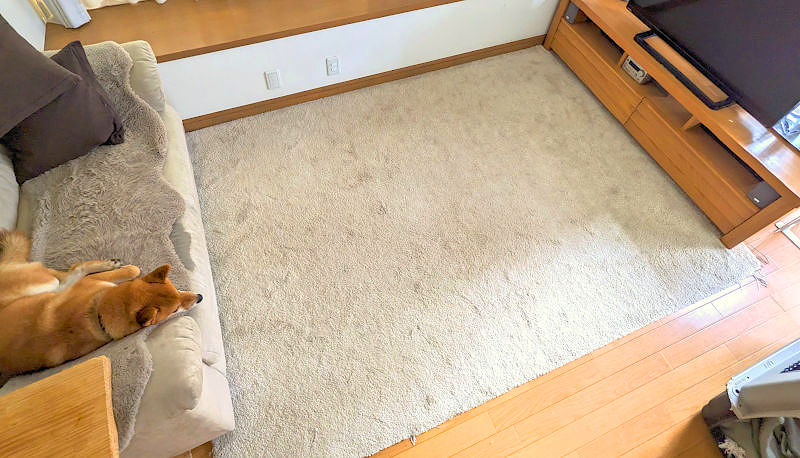
As for an environment where he can play, in our case, it is like this.

This is my main battleground…no, it’s my playground.
  • Keep objects off the floor.
  • Keep cords, power supplies, and other items that can cause electric shock out
  • Play on carpets
  • Make room for light tossing of toys

Keep objects off the floor.

As you can roughly imagine, my master do his best to keep things off the floor so that we don’t step on them, bump into them, or get excited and put them in our mouths when we are playing.

Keep out cords, power supplies, and other items that can cause electric shock.

This is also to prevent catching feet, tangling, or chewing on cords, as well as to avoid putting things on the floor.

Once, I chewed through the cord of a fan, and although it was not serious, I was very careful because it can cause electric shock in some cases.

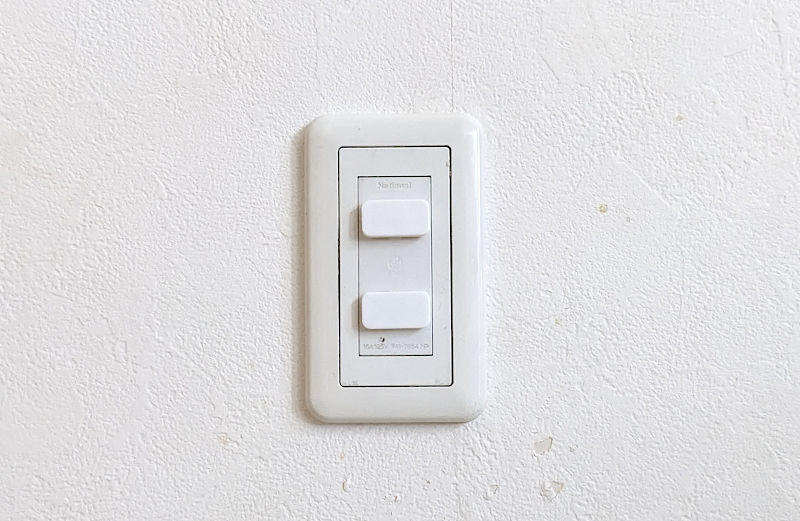
I also have the outlet holes plugged up so they don’t lick them.

Play on carpets.

We have wooden flooring in our house, but when my master play with me, he asks me to play on the carpet. My feet slip on the flooring, and it is dangerous because I cannot stand on the flooring when I play tug-and-tug, or I fall down when I am chasing after him.

When my master took me in, he put carpet tiles on the flooring so that I could play on it without slipping. Now I have a regular carpet instead of tiles.

They put carpet tiles all over the room like this.

Even if it is difficult to lay carpet tiles or carpets, there are flooring waxes that prevent pets from slipping, so Shiba Inu may be able to play on the flooring if it is coated with such waxes.

Make room for light tossing of toys.

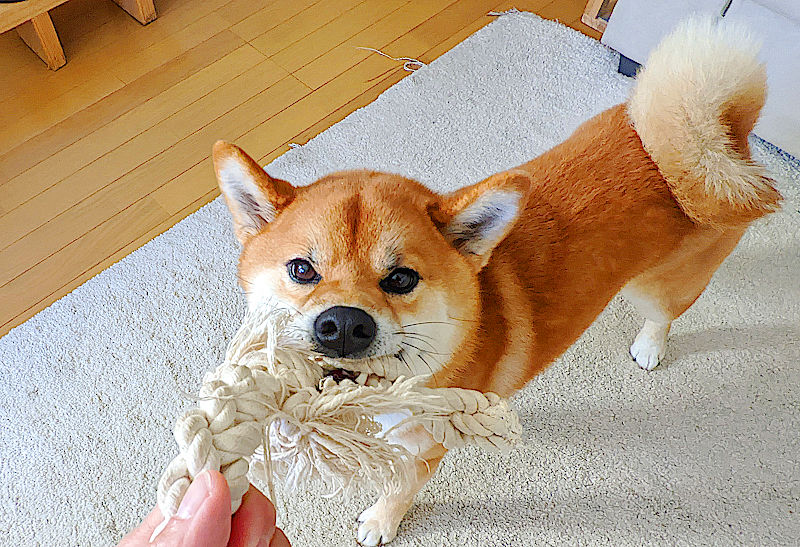
Why don’t you throw this rope for a little test?

I would like to have at least enough space to throw a rope or a ball to fetch it. As for distance, 3 meters may be enough. The wider the space, the better, but a moderate space is good because even if you have a toy thrown to me, I may suddenly stop to pick it up in the middle of the game.

Being careful when playing.

It seems that besides training and the environment in which we play, there are other things that need to be taken care of when playing with a Shiba Inu like me. I will briefly summarize some of the things my husband has taken care of.

  • Do not overexcite
  • Don’t let Shiba Inu bite you
  • Don’t play with anything but toys
Are you a “toy”?

Do not overexcite.

Sometimes when I am playing with my master, I will suddenly put my ears back and run around. I think it is because I am so excited that I can’t stand still. Other Shiba Inus seem to do the same thing and call it “Airplane Ears”.

“Airplane Ears” is when Shiba Inus are happy, so it simply means “I’m having fun!” Don’t worry, it is an expression of emotion. However, if it becomes normal, it can cause accidents and injuries, such as running around, bumping into something, or falling on the flooring. So, my master watches me for a while when I start to run around with my ears up.

Follow the rules and have fun!

Don’t let Shiba Inu bite you.

When I become engrossed in play, I will sometimes bite the hand of my master holding the toy. Also, I often go up to the hand rather than the toy because I find the hand movement amusing…. This is simply not only painful for the master, but also leads to injury, so he is very careful.

It is dangerous if it becomes normal for me to bite my master in the course of play. Please note that the biting is not that strong when Shiba Inus are small, but when Shiba Inus are as young as one year old, they can cause quite a bit of injury.

Don’t play with anything but toys.

They tend to play with towels too.

For example, if my master uses a cushion to play with me, I will eventually learn that the cushion is a toy and when I want to play with it, I will suck, pull, and swing the cushion around, eventually breaking it. Also, if I play with electrical cords, I may eventually think that the electrical cords are toys and chew on the electrical cords of the appliances you are using, which may lead to a serious accident.

I would be happy if you would be careful about which things I can chew on and which things I can pull on, and only use toys when I plays with them.

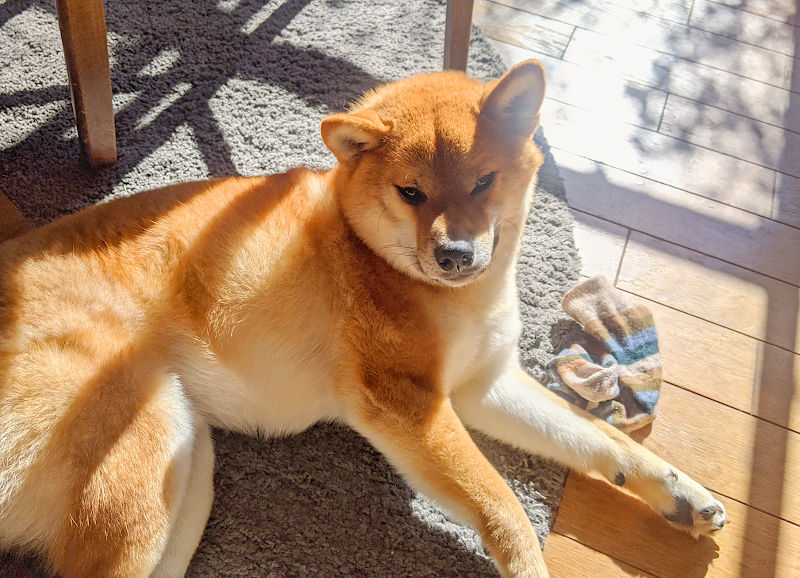
I stole a sock.

how to play with Shiba Inu.

Let me show you how I usually play. I don’t do anything difficult or expensive at all, and it’s a simple skinship with my master, so please give it a try. I am sure your Shiba Inu will be delighted!

  • pulling
  • fetching something you throw
  • Tummy flopping
  • Running together

Pulling

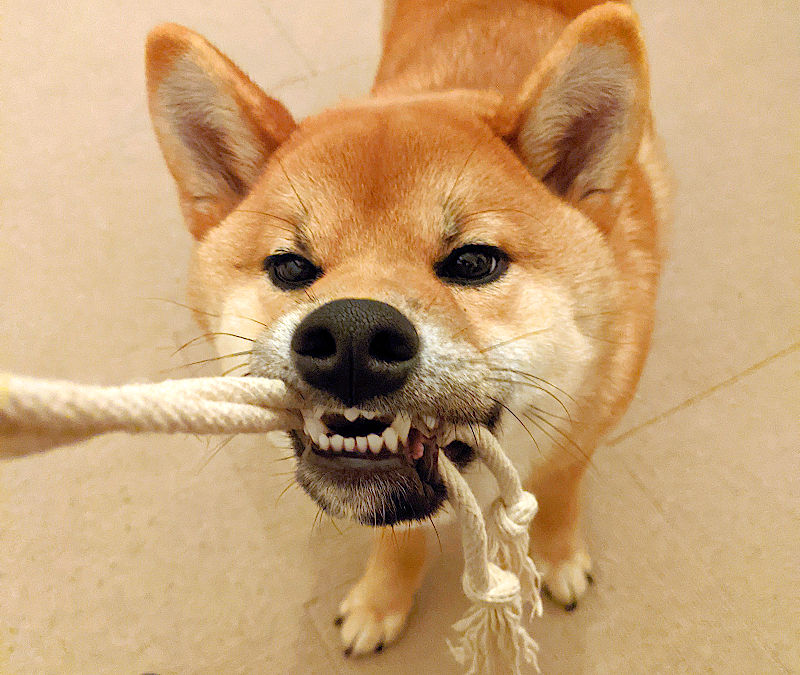
I won’t lose no matter what!

It is a favorite game of not only Shiba Inus but also other dogs.

In my case, I often use hemp ropes, but cowhide ropes, rings, and recently, a toy called a puller are also fun and easy to pull.

When I want to play, I sometimes takes the hemp rope to my master and asks to be pulled.

fetching something you throw.

I got it!

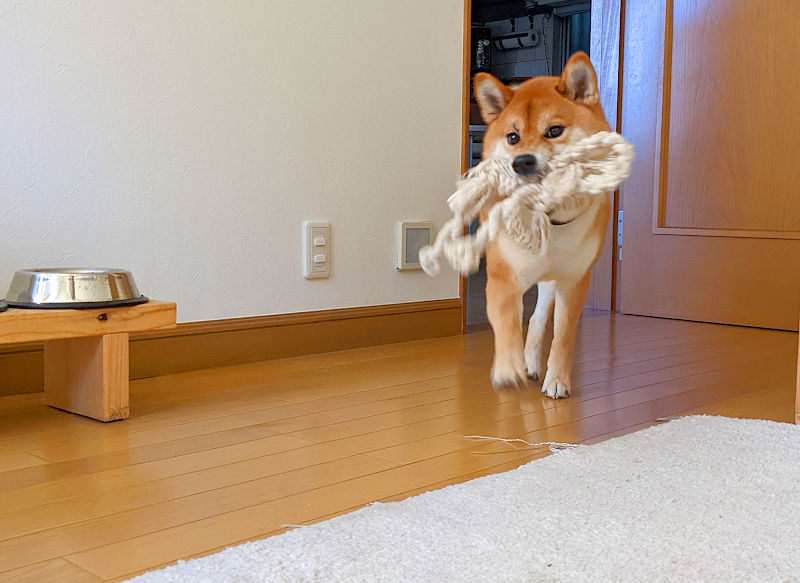
The rope throwing is usually done at the same time as the pulling game. The rope is thrown by my master, I go to pick it up, returns with it, and the pulling game begins. After playing tug-and-tug for a while, I hand the rope to my master and ask him to throw it again. This is repeated many times.

Throw it, take it, go back, pull it, throw it… After about 10 repetitions, I go for a drink of water. This is the usual way to play with my master.

Tummy flopping

Please hurry up and give me a tummy tuck.

When I get tired after a series of pulling, throwing, and retrieving, I sit or lie down near my master. Then my master will massage my stomach, and I will lie on my back and let him do the same. This is the so-called “heso-ten” state.

It feels good to have the hair on my chest ruffled.

Running together.

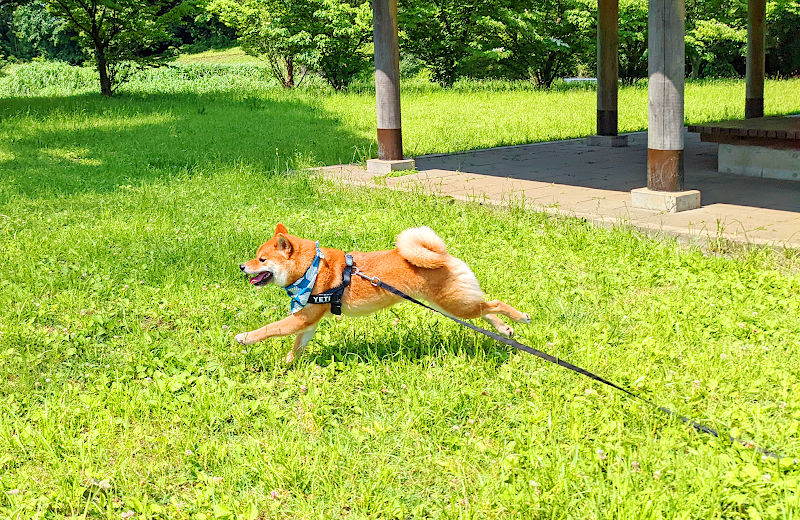
This can only be done outside, but during a walk, my master runs with the leash. I run after him. I can’t run as fast as I want unless I go to the dog run, but it’s difficult for me to go to the dog run every day, so I enjoy running after my husband.

Let’s run together!

Communicate in various ways to play.

There are many more ways to play, but I can’t list them all here.

As I mentioned earlier, it depends on your relationship with your Shiba Inu, so what I have written here is only for my own reference.

Categories
Infomations

Shiba Inu bites! There’s a reason why Shiba Inu bites…What to do if you are about to be bitten & what to do when you are bitten.

We Shiba Inus seem to be a difficult breed to handle because they play roughly and don’t learn commands very well compared to other dogs.

Now that he is 3 years old, my master and I both know when I am about to bite, so I don’t bite as much as I used to, but I still have a tendency to say, “Gulp!”

Here I would like to explain when I have almost bitten my master, when I have bitten him, and what my master thought of afterwards to prepare for and prevent biting!

Signs that I am about to bite.

I’m gonna bite you!

When I am about to bite, I give a signal, or rather a gesture of “I’m going to bite you!” If they don’t notice it, or if they touch me forcibly, I say, “Gulp!” If you don’t notice it or if you touch me forcibly, I will bite you. Please note that if you don’t notice this, or if you touch me forcibly, I will bite you.

Shiba Inus bite at times like this.

  • When Shiba Inu is sleepy
  • When you put something on Shiba Inu body
  • When you are about to have something in Shiba Inu mouth taken away
  • When you persistently touche Shiba Inu body
  • When you are wiping Shiba Inu feet

When Shiba Inu is sleepy

I’m tired from going out…

If Shiba Inu is in a trance and suddenly they are touched or hear a noise nearby, they are startled and bite.

For example, at night after a day out, they are tired and cranky.

<When Shiba Inu actually bites you.>

It was late at night, around 9:00 p.m., and I was getting sleepier and sleepier. My master was still awake at that time, so I lay down near him without going to sleep.

I often lie down under the table when the masters are sitting in their chairs, but I was startled by a noise when the master changed his legs and I bit him!

It seems that when I am feeling relaxed, I get startled when I hear noises in my immediate vicinity.

When you put something on Shiba Inu’s body.

I don’t like it, I don’t like it, I don’t like it, I don’t like it!!

If you try to put on a leash, collar, or Elizabethan collar, depending on the timing, Shiba Inu may not like it and may bite you.

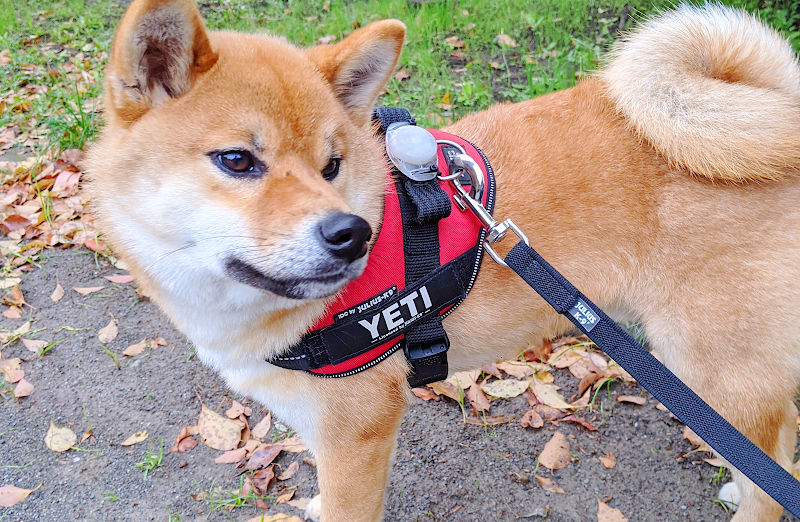
When I still didn’t like harnesses, I used to wrestle with my master just to put on a harness… It is a strange memory now.

When someone is about to take something Shiba Inu is holding in his mouth.

The things in Shiba Inu’s mouth are his prey and he will bite you if you try to take it away.

Even now, when I am not busy at home or to attract my master’s attention, I sometimes suck slippers, towels, etc., and then go berserk trying not to give it to my master.

When you try to take it away from me, I will yelp, “Gulp!”.

Huh? What is it? These socks are my prize…?

<When Shiba Inu actually bites you.>

When the sandal came from the doorway into his mouth, the master said, “Oh! No!” and tries to take it away from me. At first it is like a game of chase, but when my master grabs the sandal, I desperately resist, saying, “I won’t let go!” and I resist.

I once bit my master’s hand just as he was pulling hard on my sandal!

Other times, during a walk, I would grab a piece of tissue paper or a mask in my mouth and when my master tried to take it away, I would say “No!” and when he tries to take it away from me, I bite him…

I do not want to take away what I once put in my mouth!

When someone persistently touches Shiba Inu’s body.

I find that skinship that goes on too long becomes increasingly disgusting and makes me want to bite you.

What surprises my master is when I am giving him a massage and I suddenly barks, “Gawd”! It is a sign of “That’s enough!”

I am still not very good at being touched, especially at the base of my tail and around my buttocks, and I bite them at the drop of a hat.

Don’t touch it – don’t touch it, don’t touch it, don’t touch it!

When you tried to wipe Shiba Inu’s feet.

When we return from a walk, my master ask me to wipe my feet with a wet wipe, but I really don’t like having my toes teased, so I sometimes go into a rage and bites him.

It is not that I don’t like it every time, so it seems that I go berserk when I am worried about what is going on outside or when I haven’t walked enough or have too much energy.

Measures to prevent bites.

First of all, it would be a relief to me and to my husband if he could take precautions to avoid being bitten. If there is a Shiba Inu instruction manual, I would like to have it written down.

  • Guess by looking at Shiba Inu’s facial expressions.
  • Provide a fence.
  • Leave Shiba Inu alone.
  • Have Shiba Inu wear a leash.
  • Provide plenty of towels.

Guess by looking at Shiba Inu’s facial expressions.

This is not how I look when I bite!

Before I bite you, I have a stern look on my face. My brow is furrowed and my fangs are showing. This is what is called a “pissed off” face. This is a complete “stop it, I’m going to bite you” expression.

When Shiba Inu is sleeping, they may hear noises nearby, have their body touched persistently, or are about to be put on a leash. When Shiba Inu senses something unpleasant, his expression changes and he makes a stern face, please leave him alone.

Provide a fence.

For example, when my master eats something at the table, I am also interested in it, so I approach him and try to suck something on the table. If he puts his hand in front of me in a way that interrupts me, I may bite him.

In such a case, I would recommend that you prepare a fence at the entrance of the room or around the table so that I cannot get close to the table.

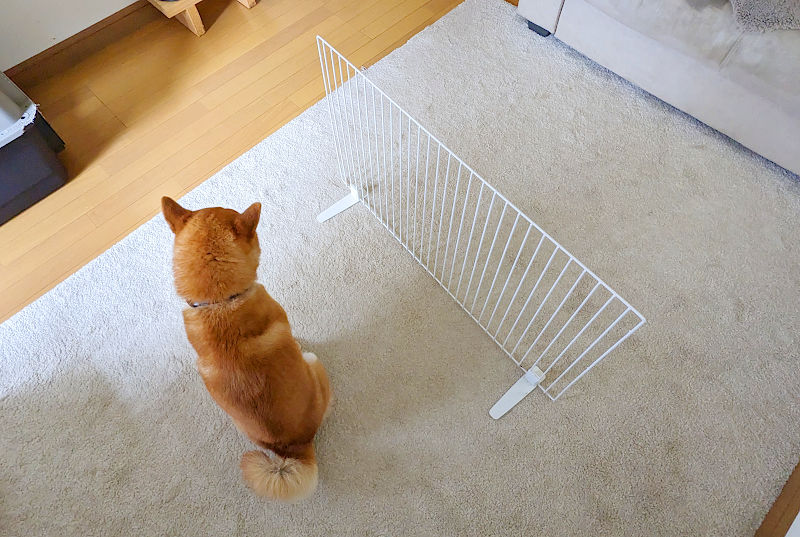
The fences will help us keep our distance from each other.

By the way, We have four such fences in our house, set up in various formations for cleaning, cooking, eating, visitors, etc.

Leave Shiba Inu alone.

When I am excited, my expression is stern, I am tired, or I am lying down to rest, if you suddenly touch me, I will bite you, so it is better to leave me alone.

If you forcefully approach or care for me, I will bend my navel and bite.

Have Shiba Inu wear a leash.

Although we do not often keep our dogs on a leash indoors unless there is something unusual going on, it is safer to keep them on a leash at first, for example, when someones are staying overnight or when acquaintances come to visit my home.

In unusual situations, Shiba Inu may first notice the smell and in some cases become alarmed. If Shiba Inu senses danger or becomes alarmed, he may become aggressive. If this happens, ask my master to pull my leash, and if my becomes agitated, I go outside and walk for a while to refresh myself.

An indoor leash would be a safe bet.

If Shiba Inu to put on a leash or held down after he is excited, there is a risk of biting, so have them put on the leash beforehand.

Provide plenty of towels, etc.

This is a last resort in case the master has no choice but to hold me up or put me on a leash, even if he is already bitten.

My master prepares four or more bath towels, or as many towels as possible, and he wraps around his hands and sometimes wraps me in the towels so that my fangs do not touch his skin when I bite.

However, if I bite him through a gap in the towel, he will be seriously injured.

Please prepare as many towels as you can!

Measures to take if Shiba Inu feels like biting but you have to touch.

There are times when my master absolutely has to touch me even when I am obviously going to bite him.

For example, when I am not leashed at the dog run and I am in a bad mood with another dog, or when I come back from a walk and my feet are dirty, or when I am asleep but I have to move away…. I find myself in “I’m going to bite you!” mode, and my master was troubled.

My master had to pick me up and touch me even though he knew I was going to bite him, and sure enough, I bit him and he got hurt.

If you have to touch Shiba Inu that you know is going to bite, it is best if you can handle the situation without touching Shiba Inu, or if possible, turn your attention to something else.

Turn Shiba Inu’s attention to other things.

…what the hell are you doing?

This is not very effective if the Shiba Inu has already started to act up, but if not, you may be able to get his attention by distracting him with treats, making high-pitched “bleep!” with a toy, play a Youtube video of some dog’s squeals at a higher volume, or swing a large stuffed animal around.

Respond by not touching.

If you have time to wait, it is best to wait until my excitement has cooled down.

The reason for my biting is often because I am warning. Unless it is something serious, once I calms down, I often becomes calm and do not resist being touched.

Please leave me alone for while.

It would be best if you could avoid biting by using a fence, towel, or cushion to move me from the area without touching me.

What to do if you are bitten.

If you are still bitten, leave the area immediately and wash the wound with water.

For shallow cuts, disinfect the wound after washing with water, apply ointment, and stop the bleeding with an adhesive bandage, and it may not be serious.

If the wound is deep or if it is difficult to stop bleeding, it may be necessary to see a dermatologist or surgeon.

There was No offense…

Also, there is a risk of tetanus from the bacteria that may enter the bite site, so it is a good idea to get a tetanus shot just in case.

However, if the dog is infected with rabies, it is a big deal, and you need to tell the doctor immediately.

There’s a reason Shiba Inu bites.

I have written many things about biting, but I believe that there is a reason for biting and that we need to find a way to avoid biting.

In my experience, there is nothing good about biting my master, and if I could avoid biting him, I would, but I do bite him when the situation calls for it.
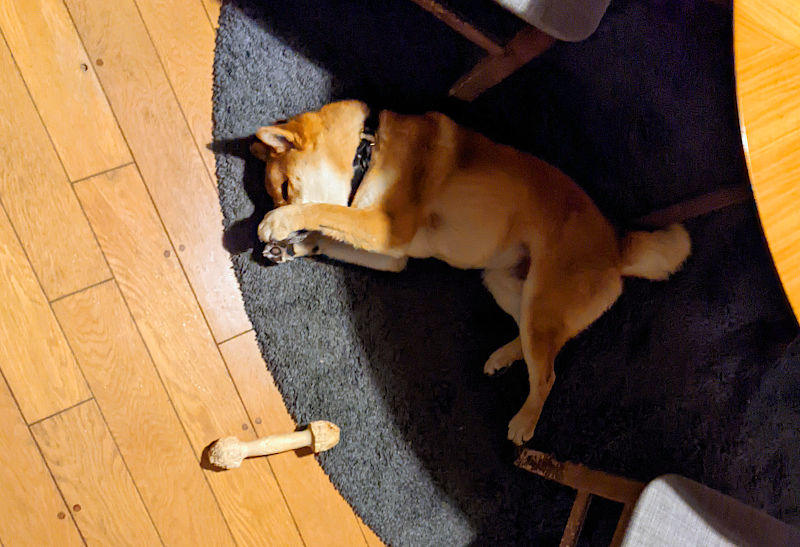
I hope you all understand us Shiba Inus better and help us to avoid biting.

I look forward to working with you.
Categories
Infomations

Shiba Inu Yeti Self Introduction

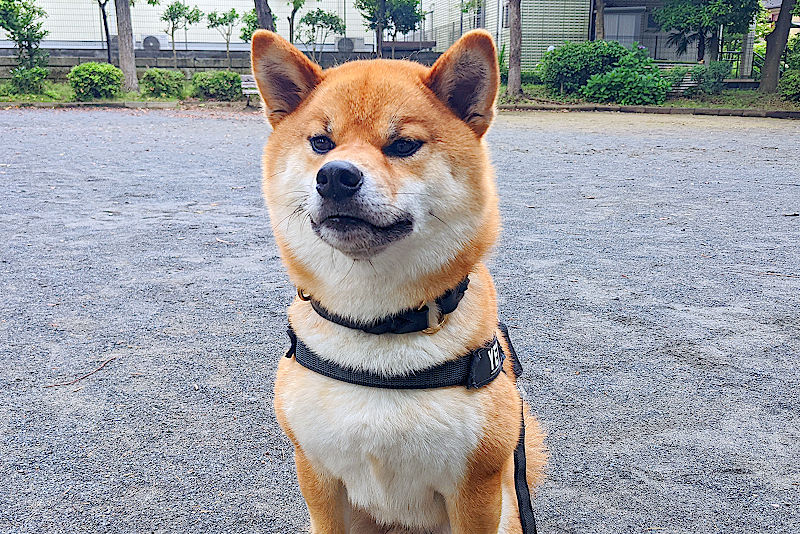
Hi! My name is Yeti, a Shiba Inu. I would like to introduce myself first before I start talking about various things on this site.

▼This is an English translation of the Japanese article here.

https://yeti-shiba.com/202110081.php

Regarding my name.

I am a male “Shiba Inu”, a pedigreed natural treasure of the Japanese Society for the Preservation of Inu, born April 23, 2020.

The color is said to be red and the face is more of a raccoon face.

My father is named “Yozakura no Yukimaru-go”, meaning “The cherry petals dancing in the night were like snow.”.

The name “Yeti” was taken over from My father’s name, “Snow,” and is registered in the pedigree. The name “Yeti” is written “Yuki-otoko” and reads “Yeti” (Yeti). …Also, it seems that he liked an outdoor brand called “Yeti”.

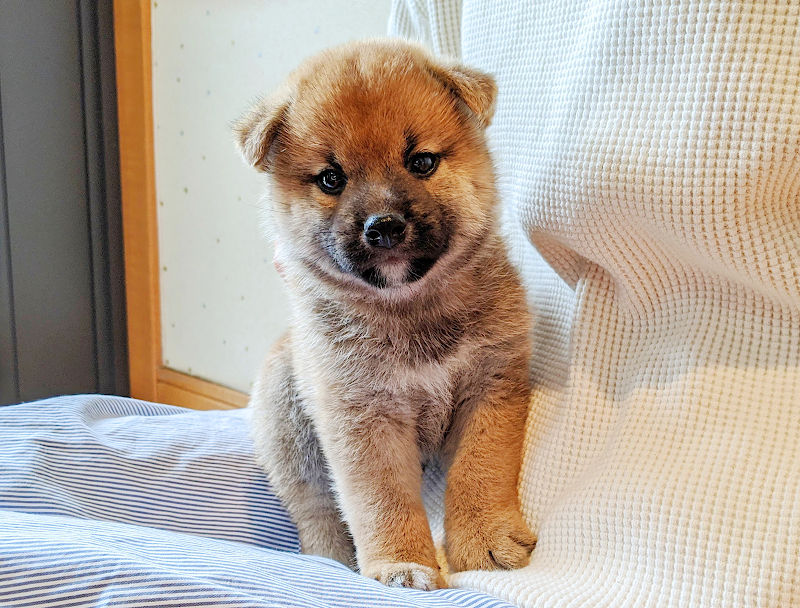
I was born and raised in Kanagawa Prefecture in Japan. I started living in my current house on June 14, 2020, roughly two months after I was born.

Now a year and a half after birth.

Looking cool at camp.

I was born on April 23, 2020, and I am writing this blog on the day he was approximately 18 months old, but I will also give you an update at that point.
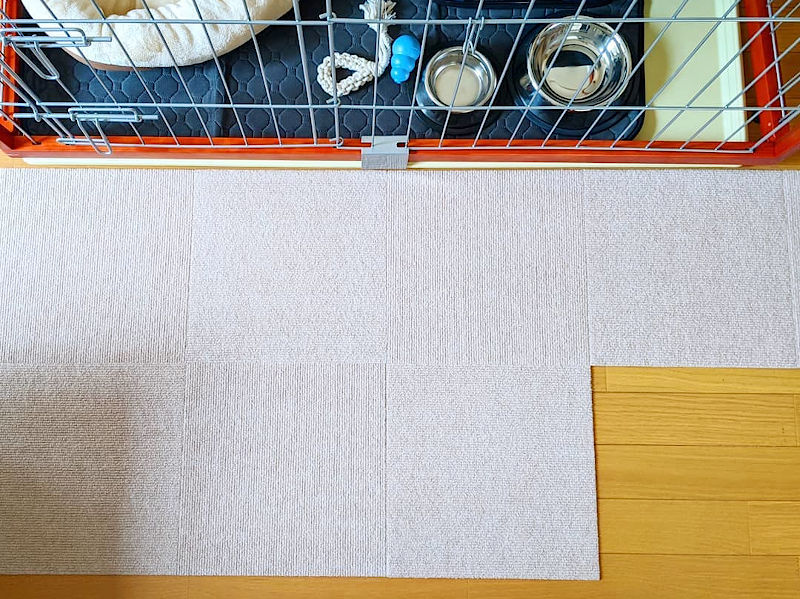
I am 18 months old and weighs approximately between 10 and 11 kg. The other day, when I was sick and had a two day food coma, I was weighed at the hospital and my weighed exactly 10 kg.
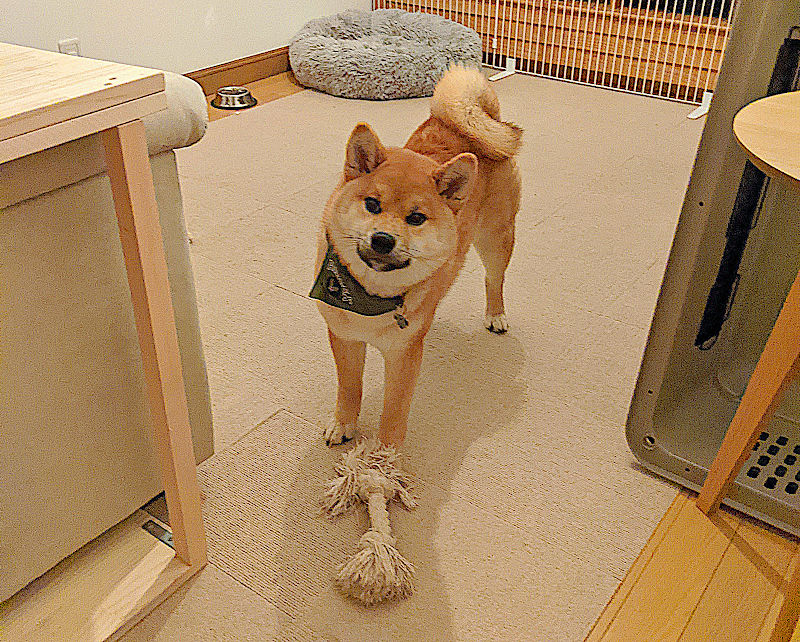
I usually spend my time indoors and only go to the bathroom when I go for walks. Until I was about 5 months old, I had use the bathroom in the house, and 80-90% of the time I did my job there, but after he learned to walk, I stopped using the bathroom indoors altogether.

I walk every day for about an hour each morning and evening. I try not to walk the same walking course, and have choose a different route each time.

Basically, I eats a little less than 1 cup (200 cc) of Royal Canin food for adult Shiba Inu (Shiba Inu) twice a day, which is about 8 to 9 portions.

The other day, I had an upset stomach that lasted for about three weeks, and since then, My master have had me drink a little lukewarm water, about the level of human skin, with my meals so that I can drink water as well.

On weekdays, My master often goes out for work and stays at home for about 12 hours at that time. On weekends and holidays, I sometimes go out with my master. I really enjoy going to a large park by car.

Thank you for your continued support.

This is how I put up a profile of myself Shiba Inu Yeti. Thank you for reading.

I have been on Instagram since he was born, if you would like to take a look. It is full of live and ordinary photos.

@yeti_shiba

From now on, I will be posting on this blog about things that come out of my ordinary daily life.